
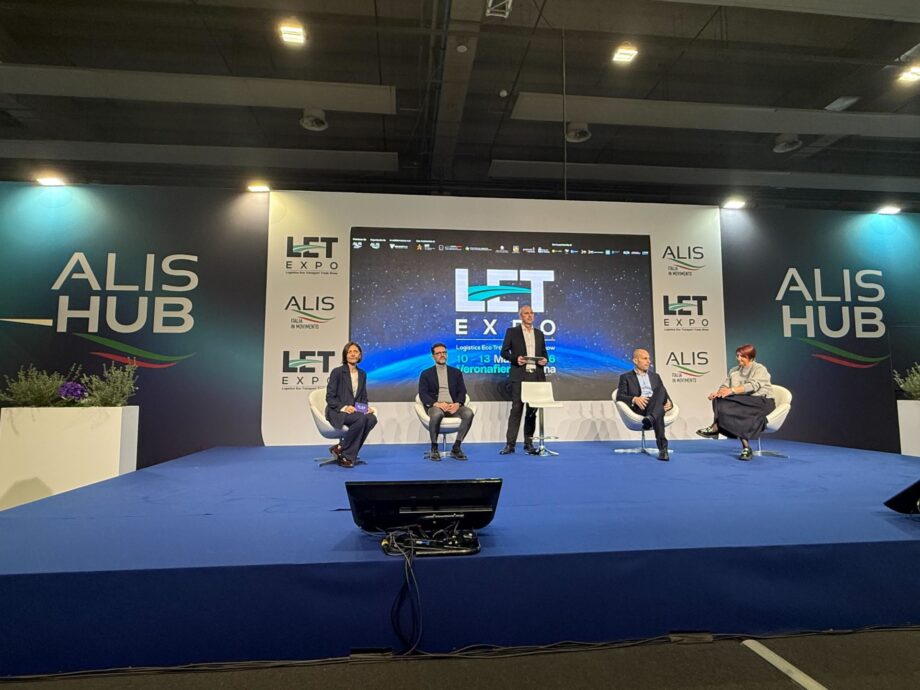
Over the past weeks, FLEET220 has taken part in three key events for energy, mobility, and logistics: KEY – The Energy Transition Expo in Rimini, LetExpo in Verona, and Fleet Manager Academy in Milano.
Across very different audiences, one message clearly emerged: the energy transition is no longer a distant horizon—it is a concrete, operational priority for fleet and logistics leaders.
A sector that has moved from “if” to “how”
Both at LetExpo and Fleet Manager Academy, the overall perception was that interest in the energy transition has grown significantly compared to twelve months ago.
Conversations have shifted from “whether” to electrify to “how fast” and “under which conditions”, especially for heavy-duty and mixed fleets.
At LetExpo, the TCO of BEV vehicles vs diesel remained the central topic in every discussion.
Recent geopolitical tensions in the Middle East were often cited as an unexpected but powerful reminder of how renewables + depot charging can become a lever for real economic competitiveness and faster return on investment, not just an environmental choice.
ODOS: payments becoming emissions intelligence
In this context, ODOS—FLEET220’s open-loop mobility payment solution built on Visa Fleet 2.0 with partners Cardlay and Enfuce—attracted strong attention at all three events.
At KEY, our CEO Carolina Solcia introduced ODOS as a tool that centralizes all mobility expenses into one secure card, simplifying life for drivers and fleet managers while delivering real-time controls, cost visibility, and ESG-ready emissions data for businesses driving low-carbon transitions.
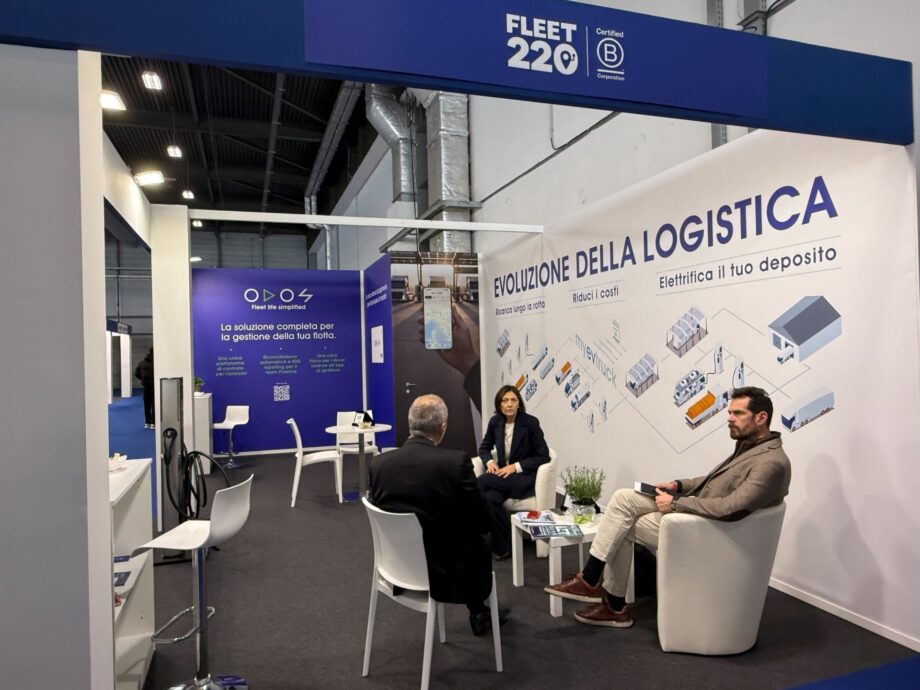
At LetExpo and Fleet Manager Academy, ODOS generated particular curiosity as the first open-loop card dedicated to fleets.
What resonated most was its ability to open new scenarios for carbon footprint mapping at driver and vehicle level, transforming every transaction—charging, fuel, tolls, parking, maintenance—into structured data that can support ESG reporting and CSRD-aligned disclosure.
LetExpo: logistics looking for certainty and competitiveness
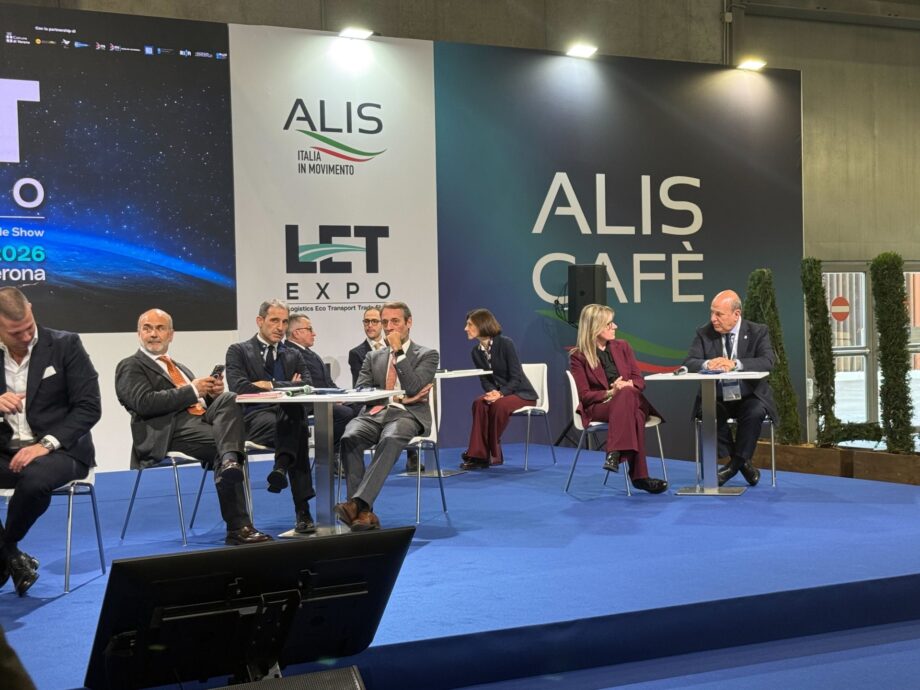
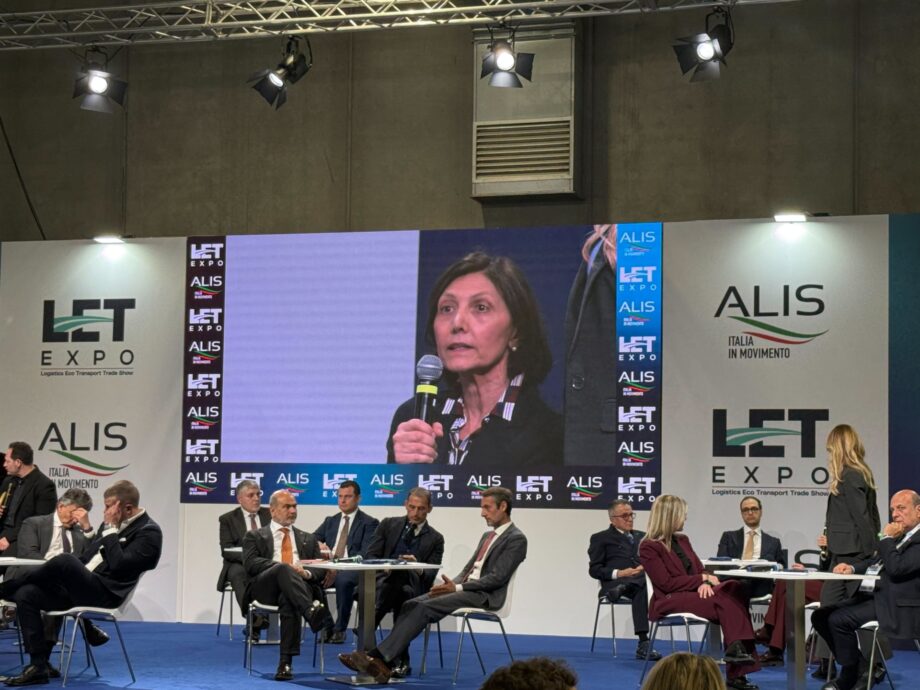
At LetExpo in Verona, within the ALIS panel on zero-emission logistics, the discussions highlighted three recurring themes:
- The appetite for transition has clearly grown versus last year, especially among operators managing national and international freight corridors.
- The BEV vs diesel TCO comparison is still the core of the debate, but the lens is widening to include resilience and independence from fuel price volatility.
- The combination of renewables and depot charging is increasingly seen as a tangible way to unlock competitiveness, stabilize operating costs, and accelerate ROI.
During the event, many stakeholders expressed ongoing skepticism about the long-term stability of new technologies, from charging infrastructure reliability to residual values and battery lifecycles.
However, the audience appeared more informed, more critical, and—above all—more ready to act: testing pilots, revisiting procurement strategies, and integrating data across telematics, payments, and energy.
In this scenario, ODOS stood out as a bridge between operations, finance, and sustainability teams, enabling logistics companies to connect day-to-day spend with emissions metrics and strategic decision-making.
Fleet Manager Academy: telematics and payments converge
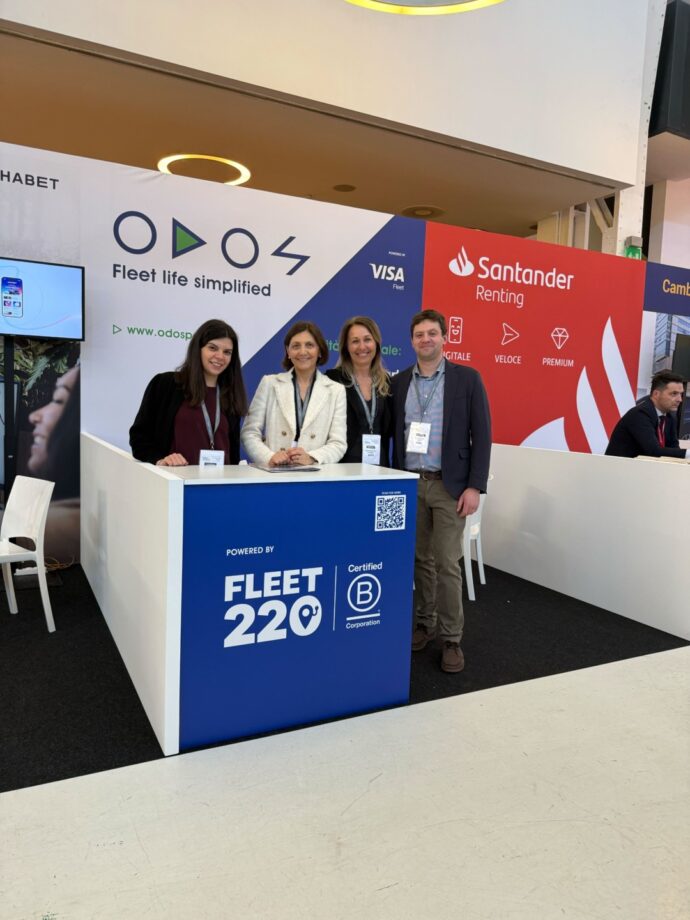
At Fleet Manager Academy in Milano, FLEET220 contributed to the panel “Fleet Management e Telematica: un rapporto sempre più stretto”, focusing on how connected vehicles, payments, and platforms are reshaping fleet operations.
Here, too, the TCO of BEVs vs diesel remained the central comparison, but enriched by a stronger focus on data quality and integration.
Fleet managers increasingly expect telematics data, charging data, and payment data to converge into a single, reliable source of truth that can serve operations, finance, and ESG reporting at once.
Our ODOS stand showcased exactly this direction: an open-loop card that unifies mobility expenses and feeds them into a management platform where every transaction can be mapped by driver, vehicle, route, and energy source.
The reaction from the audience confirmed a trend we already see in our projects: integrated telematics + payments is becoming the foundation for transparent decarbonization and effective cost control.
A sector more conscious, more demanding, and more ready
Summarizing the impressions gathered across KEY, LetExpo, and Fleet Manager Academy, a clear picture emerges:
- Interest in the energy transition is structurally higher than a year ago, across both passenger and heavy-duty segments.
- TCO remains the main decision driver, but is now read through the lens of volatility, risk, and long-term competitiveness.
- Open-loop, data-rich solutions like ODOS are seen as enablers, not add-ons: they help fleets move from fragmented tools to an ecosystem where payments, telematics, and charging speak the same language.
- The sector is more aware, more critical, and more willing to act: pilots, mixed fleets, new procurement models, and ESG-driven governance are no longer “innovation topics”, they are becoming mainstream agenda items.
As a B Corp within ROUTE220, FLEET220 sees this evolution as a strong signal of responsibility and opportunity.
Technology alone is not enough; what matters is turning it into measurable, efficient, and transparent sustainability for companies, drivers, and the communities they serve.
From Rimini to Verona to Milano, one message has been consistent:
the future of fleets is low-carbon, data-driven, and open.
Our commitment with ODOS and our broader platform is to support fleets on this path—step by step, transaction by transaction, journey by journey