
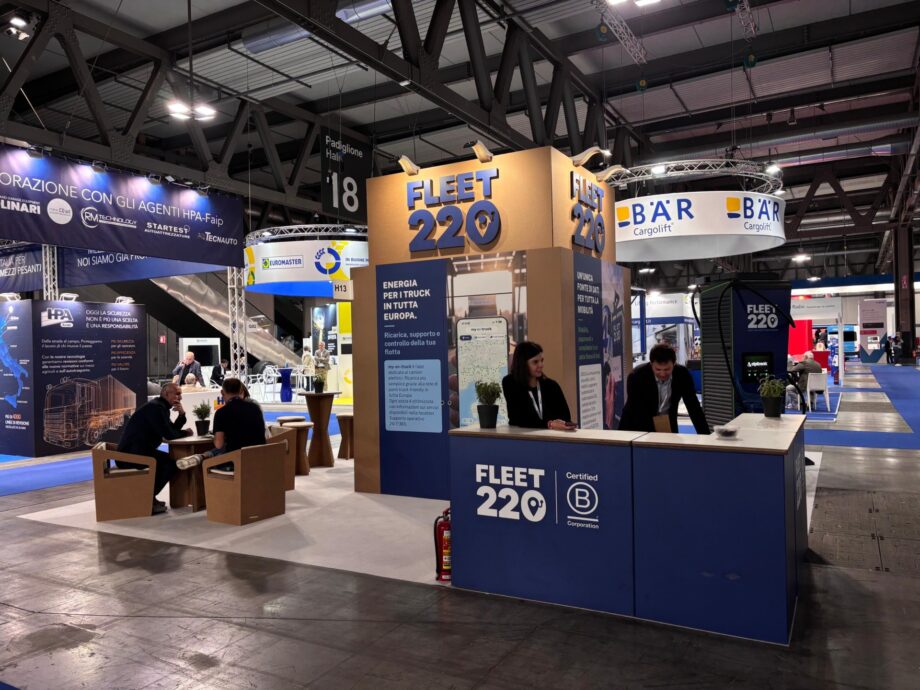
Transpotec Logitec is the leading trade fair in Italy for the freight, logistics and heavy‑duty transport ecosystem, bringing together manufacturers, fleet operators, infrastructure providers and logistics specialists to discuss operational efficiency, innovation and regulatory change. The event is a market barometer for trends that shape long‑haul and last‑mile freight, and in 2026 it highlighted an accelerating shift to electrified heavy transport and data‑driven fleet management.
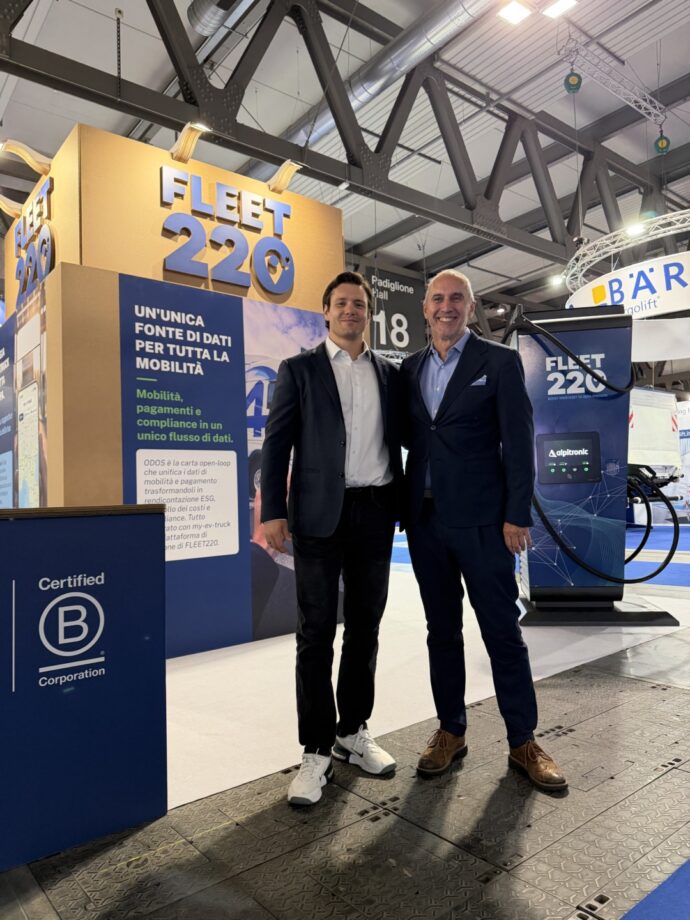
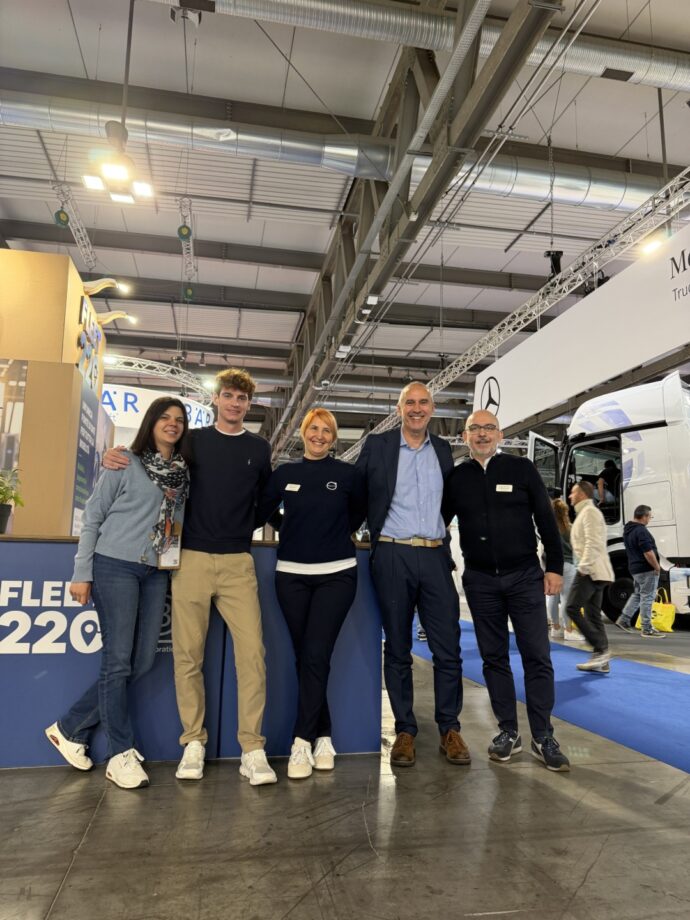
Last week at Transpotec Logitec 2026 in Milan, FLEET220 presented its my-ev-truck truck‑charging app, ODOS payment solution and depot charging approach to an audience of fleet operators, logistics centers and international stakeholders. The response confirmed a clear market need for independent, flexible and measurable electrification solutions for heavy‑duty fleets.
my-ev-truck: cross‑border interest and regulatory readiness
my-ev-truck attracted significant attention not only from Italian operators but also from international, cross‑border companies. Several visiting delegations identified regulatory drivers in their home countries — including already‑in‑force public charging obligations for trucks — that make an independent Italian pioneer like my-ev-truck particularly relevant for multilingual, transnational operations. Visitors valued the solution’s neutrality and its fit for multi‑jurisdiction compliance.
CO2 measurement and ESG reporting: data as the backbone
A recurring conversation at the stand was the link between telematics, charging data and credible ESG reporting. Attendees repeatedly stressed the need to move from approximate estimates to verifiable CO2 calculations based on measured consumption and vehicle telematics, so that official reports and compliance documents are defensible and traceable. FLEET220’s data‑centric approach resonated with companies aiming to integrate charging telemetry into their ESG frameworks.
Depot charging and solar integration: independence matters
Depot charging for heavy-duty transport — especially when integrated with on-site solar production — has become a strategic priority. FLEET220’s key differentiator is energy independence from external suppliers: operating as a CPO (Charge Point Operator) allows the hub owner to set revenues and tariffs, effectively functioning as a semi-public charging station. Through the FLEET220 platform, logistics hub operators can independently define pricing policies and monetization strategies, generating additional revenue and increasing the site’s economic value. This approach also provides greater operational flexibility and tighter control over energy costs, with clear economic and environmental benefits.
ODOS: drivers, HR and a smoother mobility experience
ODOS generated strong interest among drivers and HR teams alike. By simplifying and centralizing all mobility expenses (from EV charging to tolls, parking and maintenance) in an open‑loop system, ODOS creates a frictionless experience for drivers while improving expense control for employers. This seamless mobility model is attractive to HR departments focused on employee experience and talent retention in a competitive market.
Why these themes matter for FLEET220 customers
The conversations at Transpotec confirmed that customers want solutions that combine: operational simplicity for drivers, regulatory readiness for cross‑border fleets, measurable CO2 and ESG data, and financial control for site owners. FLEET220’s services — from my-ev-truck to ODOS and independent depot charging — is positioned to meet these demands with a people‑centric, tech‑driven approach that aligns with ROUTE220‘s Group B Corp commitment.